

What is the finding
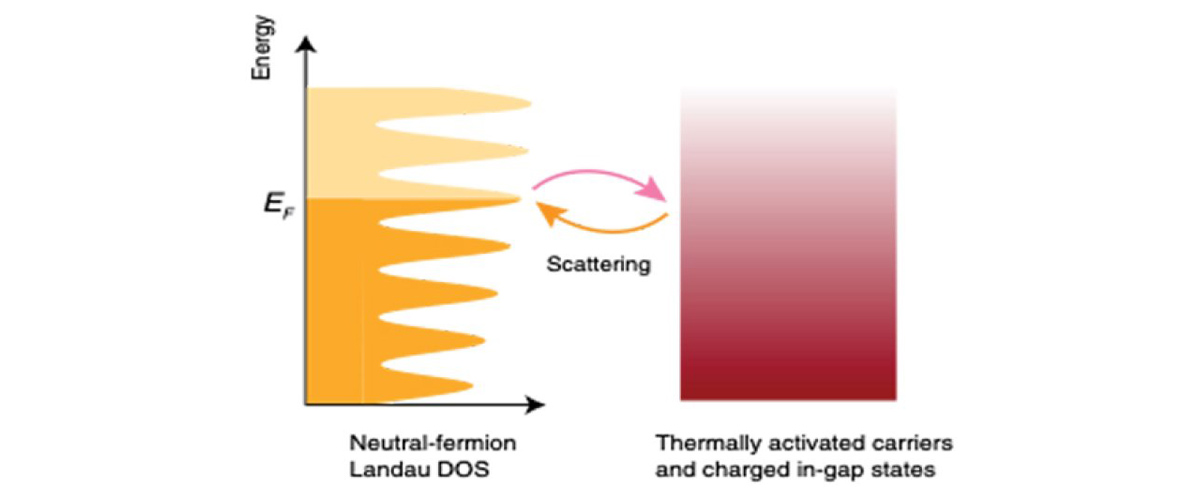
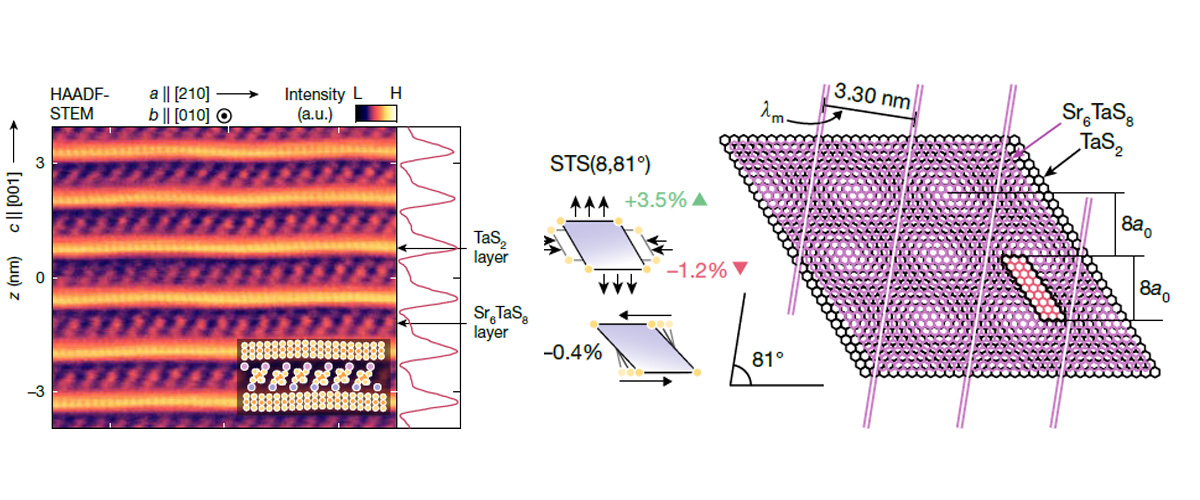
MIT researchers, working at the MagLab, discovered a new family of crystals in which electrons behave as if they live in four spatial dimensions instead of three. Crucially, these crystals are grown in bulk by ordinary solid-state chemistry—not painstakingly assembled layer-by-layer like all previous moiré materials.
Why is this important?
Moiré materials are among the most exciting platforms in modern physics because their electronic behavior—superconductivity, magnetism, exotic insulating states—can be tuned simply by adjusting how layers are stacked. But making them has, until now, required hand-stacking individual atomic sheets one at a time. Showing that nature can grow these structures in bulk crystals removes a major obstacle to using moiré materials in real-world electronics. At the same time, the discovery that electrons in these crystals access a “fourth dimension” of motion provides the first laboratory platform to test theoretical predictions about higher-dimensional quantum matter—physics previously confined to mathematics. This research moves moiré materials from closer to scalable, tunable platforms for new technologies in electronics, sensing, and quantum computing.
Who did the research?
Kevin P. Nuckolls1,7*; Nisarga Paul1,7*; Alan Chen2; Filippo Gaggioli1; Joshua P. Wakefield1; Avi Auslender3,4; Jules Gardener3; Austin J. Akey3; David Graf5; Takehito Suzuki6; David C. Bell3,4; Liang Fu1; Joseph G. Checkelsky1
1MIT , Dep of Physics; 2MIT, Department of Electrical Engineering and Computer Science; 3Harvard University, Center for Nanoscale Systems; 4Harvard University, School of Engineering and Applied Sciences; 5National MagLab; 6Toho University, Department of Physics, 7These authors contributed equally.
Why did they need the MagLab?
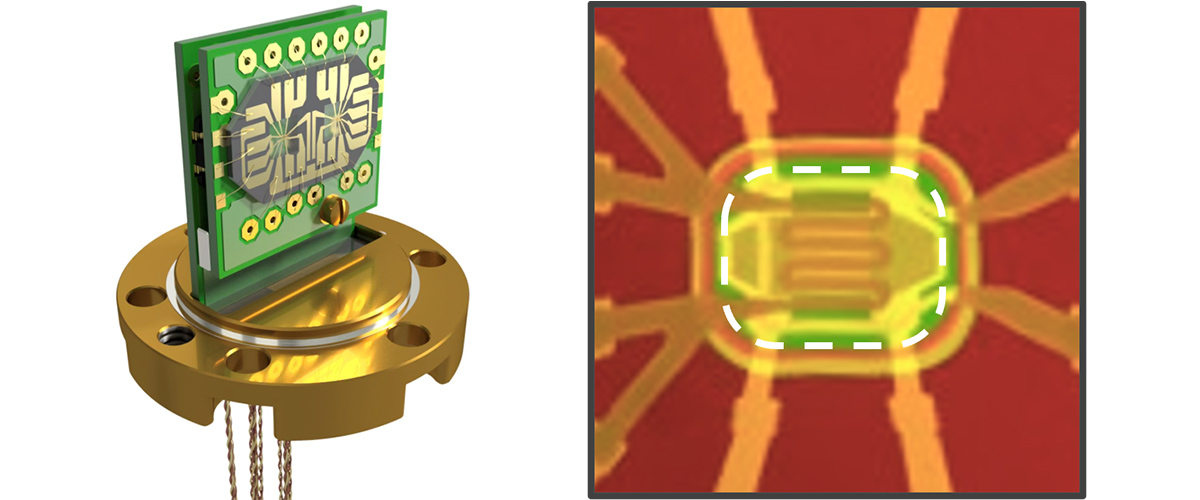
Identifying the higher-dimensional Fermi surface required clean, very-high-field measurements of quantum oscillations—delicate variations in a material’s magnetic response that act as a fingerprint of its electrons. The MagLab’s DC-Field Facility uniquely combines steady fields above 30 tesla with the precision torque-magnetometry and transport instrumentation needed to resolve more than 40 simultaneous oscillation frequencies. No other facility could have provided both the field strength and the measurement stability this discovery required.
Details for scientists
- View or download the expert-level Science Highlight, Bulk Moiré Crystals Reveal a Higher-Dimensional World for Electrons
- Read the full-length publication, Higher-dimensional Fermiology in bulk moiré metals, in Nature
Funding
This research was funded by the following grants: K. M. Amm (NSF DMR-2128556); J.G.C. (Gordon and Betty Moore Foundation EPiQS GBMF9070; DOE BES DE-SC0022028; ONR N000142412407; ARO W911NF-24-1-0234); K.P.N. (MIT Pappalardo Fellowship); L.F. and J.G.C. (AFOSR FA9550-22-1-0432); F.G. (Swiss NSF Postdoc. Mobility 222230); STC CIQM (NSF DMR-1231319); Harvard CNS (NSF ECCS-2025158)
For more information, contact Alimamy Bangura.