

Contact: Julia Smith | John Kynoch
TALLAHASSEE, Fla. — “We need more power!”
It’s a catchphrase that started with Star Trek then became a popular meme. And it rings true at the National High Magnetic Field Laboratory.
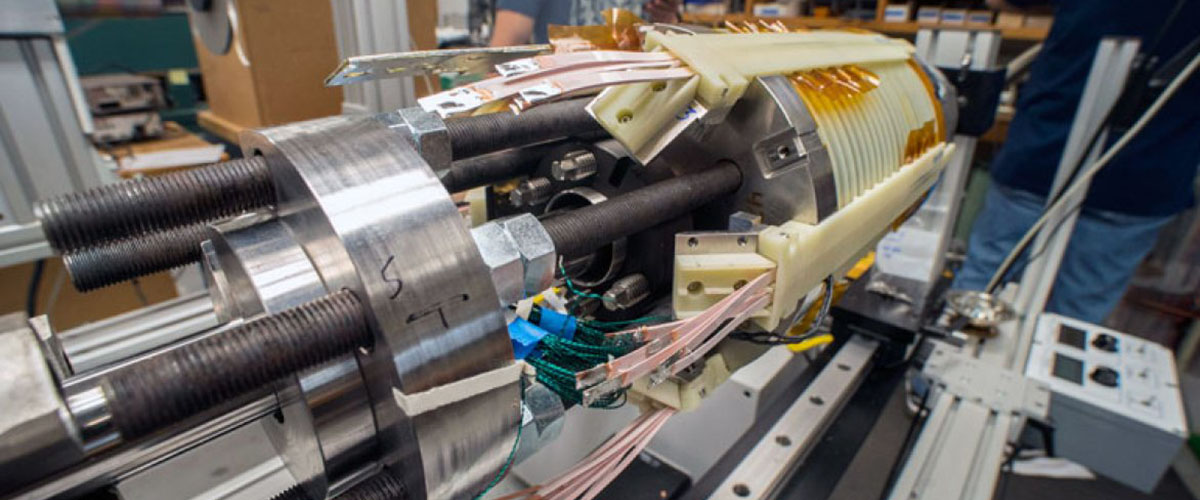
The MagLab, already the highest-powered magnet laboratory on the planet, is boosting its electric capacity, installing a new electric power system for its fleet of large, water-cooled magnets. The six-month project, funded by the Florida Legislature and Florida State University, will improve reliability, safety, and capability. When it comes to the lab’s electromagnets, more power generates higher magnetic fields and empowers more cutting-edge research.
“We’re so grateful that state leaders and FSU continue to invest in the MagLab and its research mission. This support is critical to maintaining our place as the world’s leading high-magnetic field laboratory,” said MagLab Director Kathleen Amm.
New Electrical Infrastructure
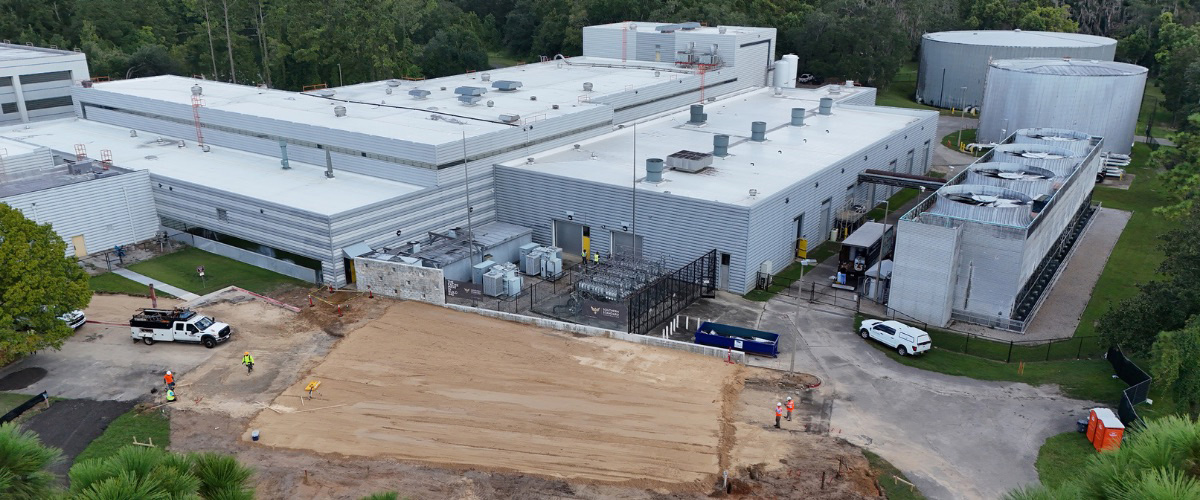
A large area at the front of the lab’s headquarters in Tallahassee is fenced off and crawling with construction workers. In the coming months, more big trucks, big cranes, and big equipment will roll in.
Crews are replacing and upgrading electrical equipment that has been powering the site since the lab’s construction in 1992. At the heart of the project is installation of a new $4.5 million switchgear – a compact version of an electrical substation. The massive piece of equipment is 13 feet tall, 16 feet wide, and 55 feet long, or about the size of an adult humpback whale. It weighs in at more than 100,000 pounds. Like a giant-sized version of the breaker box in your house, the switchgear divides power coming into the lab into circuits to manage electrical flow and provide advanced protection. That faster breaker operation will reduce risks from surges or short circuits.
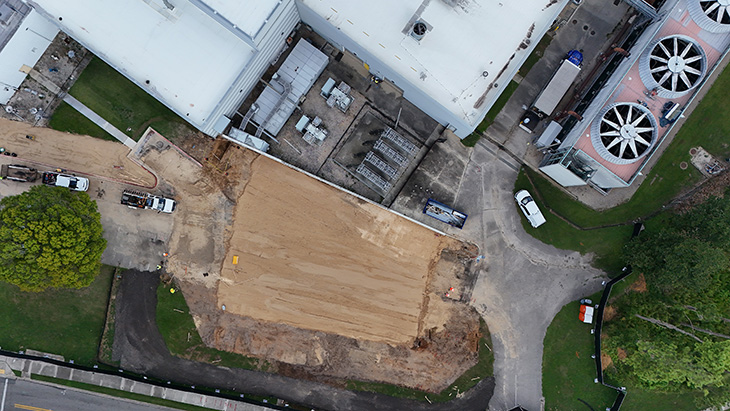
An aerial view of the MagLab’s current power yard (top, center) and the construction area where the yard will be expanded.
A new $10 million power bank installed alongside the switchgear will monitor and correct power quality and fluctuations, automatically adjusting to improve efficiency and reduce noise that could affect sensitive measurements or equipment. The bank will have four times as many capacitors to filter and synchronize electricity flow, allowing the lab to use power more efficiently. The new bank will also be enclosed to reduce hazards from the environment.
“The MagLab team has been working on this upgrade for a long time. It’s exciting to see it come to life,” said Julia Smith, Director of the lab’s DC Field facility, “We must keep improving to support important research in high magnetic fields that’s paving the way for tomorrow’s technology.”
Powering More Cutting-Edge Research
The upgrade is the second phase of a three-part, decade-long project to boost the lab’s total power. Once the new switchgear is in place, the DC power system inside the lab which powers the electromagnets is set to be upgraded. Magnet cooling capacity was increased a few years ago, including stronger pumps to move chilled water through the magnets. The ultimate goal is to boost the lab’s total power available to run magnets more than 20%, from 56 megawatts to 68 megawatts. A single megawatt can power about 500 homes.
The lab’s highest-field magnets draw more than 30 megawatts each. Sixty-eight megawatts will allow two of those mega magnets to operate at the same time rather than staggering schedules. More time with big magnets powered up means more access for researchers from around the world. Some 1,500 to 2,000 scientists a year conduct research using the lab’s one-of-a-kind systems. Thousands more are turned away because there’s more demand than magnet time. These upgrades will allow additional research groups to work at the lab, advancing scientific understanding across disciplines from physics to biology to chemistry.
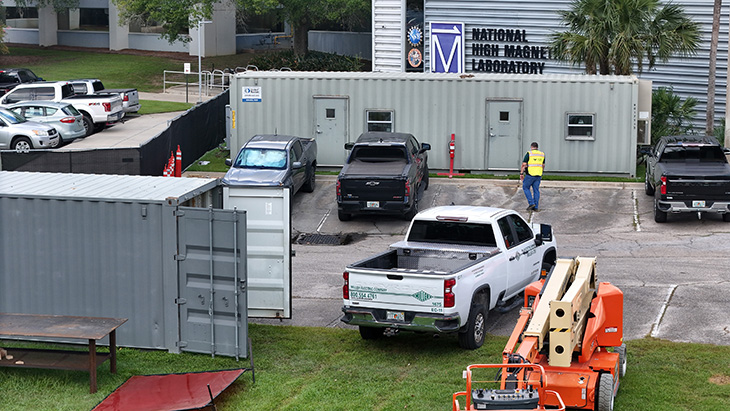
Construction work underway outside the National MagLab headquarters.
Other Upgrades
During the power system installation, the facility team and contractor partners will also make upgrades to two other key infrastructure pieces. The cooling tower for the lab’s magnet cooling system will be torn down and replaced. The tower uses fans and falling water for evaporative cooling, lowering water temperatures by 10 degrees. The new tower, built of fiberglass rather than wood and metal to reduce wear, will increase cooling capacity from 26-thousand to 32-thousand gallons per minute. Crews will also drain, clean and paint the 3.3 million gallon tank that holds chilled water for the magnet cooling system.
All of this infrastructure supports the lab’s ongoing scientific mission, using high magnetic fields to answer pressing questions about our world.
“This is where the lab is going,” said facilities director John Kynoch, “We need to do more precise measurements with more power. We are setting the stage to empower more cutting-edge science for decades to come.”