
Contact: Lydia Babcock-Adams
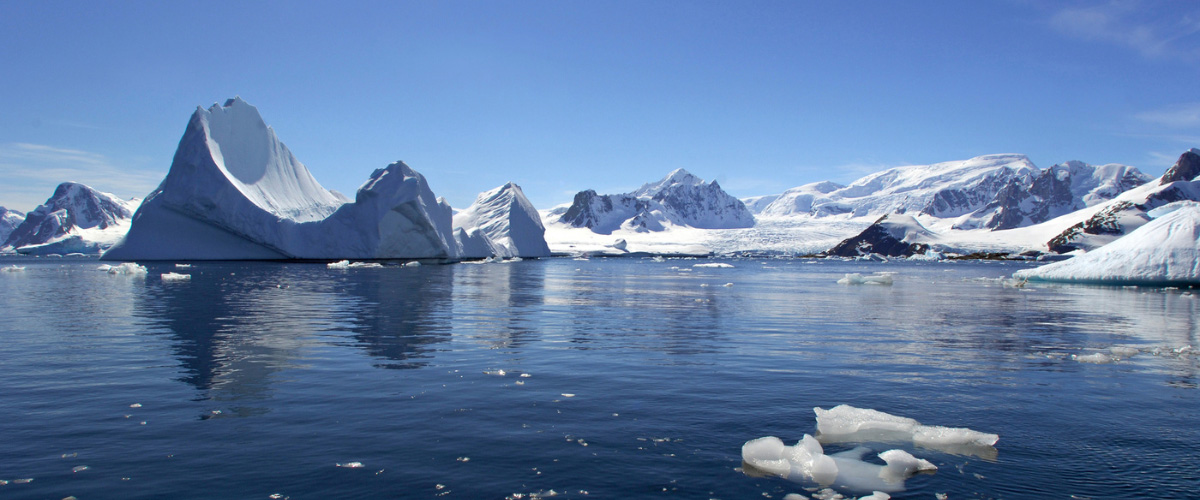
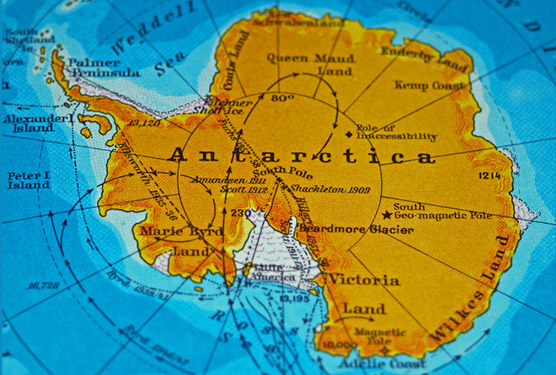
TALLAHASSEE, Fla. — MagLab researcher Lydia Babcock-Adams is on a great adventure. The chemical oceanographer is on a two-month journey to Earth’s frozen and forbidding southernmost continent - Antarctica.
“This is very exciting. It's the opportunity of a lifetime,” she said.
Babcock-Adams flew to southern Chile to board the Research Vessel Roger Revelle alongside two dozen scientists on the National Science Foundation excursion. The scientists are researching ocean water, seabirds, penguins, and whales as part of a decades-long NSF project monitoring marine ecology around the Western Antarctic Peninsula. Antarctica holds about 70% of the world’s fresh water, and environmental changes on the continent are creating ripple effects around the world.
Babcock-Adams is joining Benjamin Van Mooy’s team from Woods Hole Oceanographic Institution, whose work focuses on understanding microbial populations and biogeochemical responses to changing conditions in the Southern Ocean.
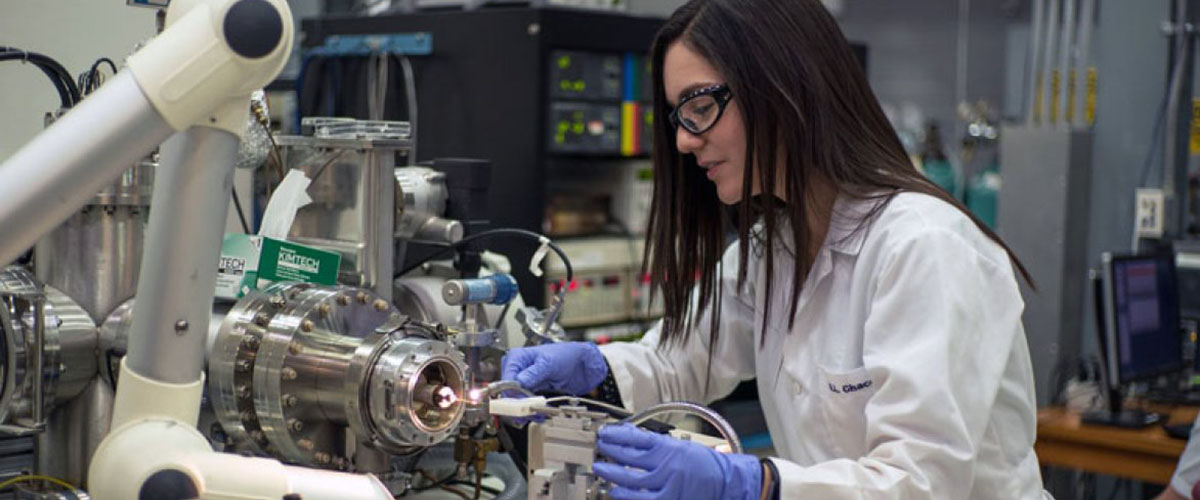
Lydia will assist the Van Mooy team, bringing her experience from six previous research voyages, knowledge of sample collection, and background as a marine chemist. She also plans to collect her own surface water samples to bring back to the MagLab. She’ll use the lab’s 21 tesla Ion Cyclotron Resonance magnet, the most powerful mass spectrometer in the world, to analyze organic matter and metals in the seawater.
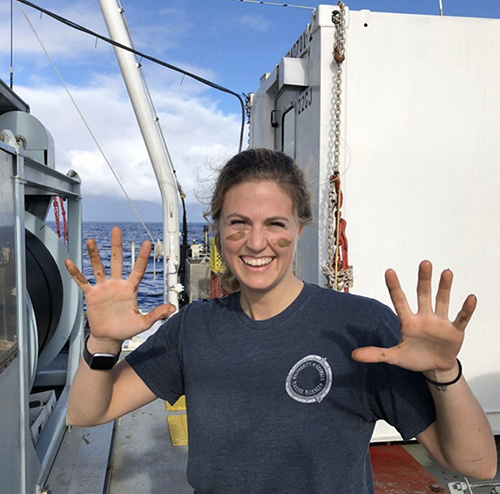
“I’m interested in seeing how chemical composition changes as we go from close to the coast to off the continent because you've got glaciers on the continent that are melting and the meltwater is going out into the ocean,” Babcock-Adams said. Water from melting glaciers can change the chemical makeup of seawater, potentially impacting how ocean plants and animals live and grow.
While Babcock-Adams is experienced in research voyages, this longer trip of nearly two months at sea has required a more rigorous physical screening to assure all on board are healthy. Plus there’s the daunting journey of sailing across the Drake Passage between South America and Antarctica, known as the roughest sea in the world with ferocious winds, massive waves, and powerful currents.
“I’ve never been in super rough seas, but some of the people I've worked with have, and one of them was telling me how he was in his bunk, and he had to put his arm underneath the mattress because he was being thrown side to side,” she said. “So, we’ll see.”
Read Lydia's blog from aboard the Roger Revelle.
R/V Roger Revelle is operated by Scripps Institution of Oceanography under a charter agreement with the Office of Naval Research. Roger Revelle is one of six major oceanographic research vessels owned by the U.S. Navy and operated for shared-use through the University-National Oceanographic Laboratory System
The National Science Foundation is the primary U.S federal agency supporting research at the frontiers of knowledge, across all fields of science and engineering (S&E) and all levels of S&E education. Important support for research vessel operations at Scripps Institution of Oceanography is supported by the National Science Foundation (including awards 1119644, 1212770, 1227624, and 1321002).