The MagLab is funded by the National Science Foundation and the State of Florida.
The MagLab is funded by the National Science Foundation and the State of Florida.
The National High Magnetic Field Laboratory (MagLab) at Florida State University will host the 2026 Annual MagLab Users Committee Meeting in Tallahassee, FL, from Monday, October 26, to Wednesday, October 28, 2026.
Special Workshop: From Magnet to Market
User Committee Meeting:
Note: All User Committee members and User Workshop presenters will have their travel and attendance expenses reimbursed.
Additional details will be posted as they become available.
Presenter: Chuck Agosta, Professor, Physics, Clark University
Presenter: Ali Bangura, Director of Commercialization, National MagLab
Presenter: Niyaz Beysengulov, Sr. Director of Quantum Engineering, EeroQ Corporation
Presentation: From Trapped Electrons to Quantum Hardware: Building Technology Around a Novel Qubit
Abstract: Electrons trapped on the surface of liquid helium have been studied in physics labs for decades. But turning that platform into the foundation of a quantum computing company is a very different challenge. In this talk, I'll share my path from academic research on electrons-on-helium (eHe) qubits to my current role as Sr. Director of Quantum Engineering at EeroQ, where we're building a quantum hardware around this platform. I'll describe how the work grew from small-device experiments into a broader system-level engineering effort spanning device physics, cryogenics, instrumentation, and software. I'll walk through the defining moments that shaped that transition: the point where "interesting physics" had to become "engineerable technology," the early technical ideas that paid off (and the ones that didn't), and what it took to convince investors and collaborators that a platform most of the field had left on the shelf was worth building a company around.
Presenter: Rodnar Duens
Presenter: Matthew Grayson, Professor, Electrical & Computer Engineering | Director, McCormick Engineering Global Initiatives
Presentation: Quality-of-life healthcare hidden in the quantum-Hall-effect
Abstract: The pursuit of novel characterization techniques for quantum systems sometimes produces unexpected dividends. Here a personal story will be recounted of how an initial goal of improving electron transport characterization in quantum wells led to electronic measurement methods and algorithms with transformative impact in the field of electrical impedance tomography (EIT) for biomedical imaging. Key pivotal moments in this journey were largely serendipitous and involved random hallway conversations and chance encounters, with the main lesson being to always keep an open mind and expand the network of colleagues with whom you have conversations. This story may help fellow innovators find similar opportunities for branching out beyond their comfort zones to find broader relevance of their technology in unexpected places.
Presenter: Mike Harsh, Co-Founder & Chief Product Officer, Medtech MVP | Former Vice President & Chief Technology Officer at GE Healthcare
Presentation: Same Physics, Different Outcomes: What Four Decades of Wins and Losses Teach About Technology Portfolios
Abstract: Drawing on four decades spanning GE Healthcare, NIH technology portfolio leadership, and board-level work across medical device and quantum-health startups, this talk asks why the same underlying science can succeed or fail depending on how an organization classifies and resources it — as market creation, continuous innovation, or disruption. Using paired case studies — including two attempts at hyperpolarized MRI fifteen years apart, one that stalled inside a Fortune 500 company and one now scaling across a preclinical research network at Memorial Sloan Kettering and Cambridge ahead of a targeted 2027 move into the clinic — the talk offers a practical framework for managing innovation portfolios and avoiding the most common mistakes in moving technology from the lab to the market.
Presenter: Tom Painter, Director of MS&T, National MagLab
Presentation: Building High Performance Magnetics to Deliver Superconducting Cable Technology for ITER, an international fusion experiment in France.
Abstract: In 2007, High Performance Magnetics (HPM) was formed to translate expertise developed at the National High Magnetic Field Laboratory into a commercial enterprise supporting one of the world's largest scientific projects, ITER. Operating from a purpose-built facility at the Tallahassee Regional Airport, HPM developed the specialized infrastructure, manufacturing processes, and diagnostic technologies required to insert and compact Nb₃Sn cable into stainless steel jackets, producing cable-in-conduit conductors for the ITER Toroidal Field magnet system. This presentation will share the journey from laboratory research to industrial execution, highlighting how a small technology company leveraged national laboratory expertise, federal partnerships, and engineering innovation to participate in a multibillion-dollar international fusion energy program.
Presenter: Paul Speir, Senior Vice President, Global MRMS Business, Bruker
Meeting registration no later than September 30th.
Go to the 2026 Annual MagLab Users Committee Meeting Registration
(Everyone must register, including those who plan to attend virtually)
The event will be held at the National High Magnetic Field Laboratory, 1800 E. Paul Dirac Drive, Tallahassee, FL 32310, in room B101.
The only facility of its kind in the United States, the National High Magnetic Field Laboratory (less formally known as the Magnet Lab) is the largest and highest-powered magnet laboratory in the world, headquartered in a sprawling 370,000-square-foot complex near Florida State University in Tallahassee. The lab also includes sites at the Los Alamos National Laboratory in New Mexico and the University of Florida in Gainesville. Together these three institutions operate the lab, collaborating in a unique, interdisciplinary way to advance basic science, engineering and technology in the 21st century.
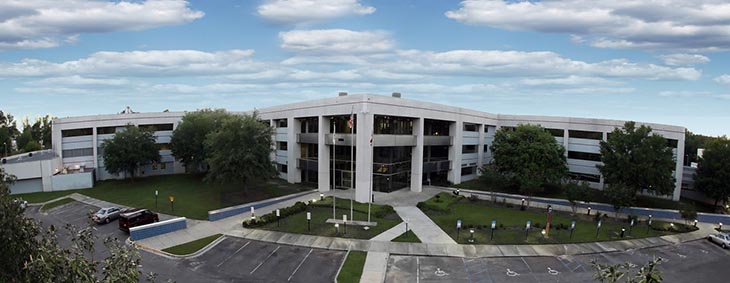
The Magnet Lab
Established by the National Science Foundation in 1990, the lab is a national resource open to both curious visitors and world-renowned scientists. Centralizing the country's greatest magnet-related tools, resources and expertise is not only efficient and cost-effective, but also encourages fruitful, collaborative research at the highest level. Every year, more than 900 visiting scientists and engineers from across the world conduct experiments using our state-of-the-art equipment. Our magnets are far larger, far more powerful and far more complex than the everyday magnets most people are familiar with. Many were designed, developed and built by our magnet engineering and design team, widely recognized as the finest in the world.
The National High Magnetic Field Laboratory offers the Dirac Postdoctoral Fellowship, a two-year (renewable for an additional year) postdoctoral fellowship in condensed matter theory. The program is designed for Ph.D.'s with a research interest in any of the condensed matter areas represented by the three sites of the National MagLab. In particular, this year, we are looking for applicants interested in any of the following research topics: unconventional superconductivity, strongly correlated electron systems, magnetism, 2D moiré/graphene/TMD systems, and plasmonics.
Hotel Reservations
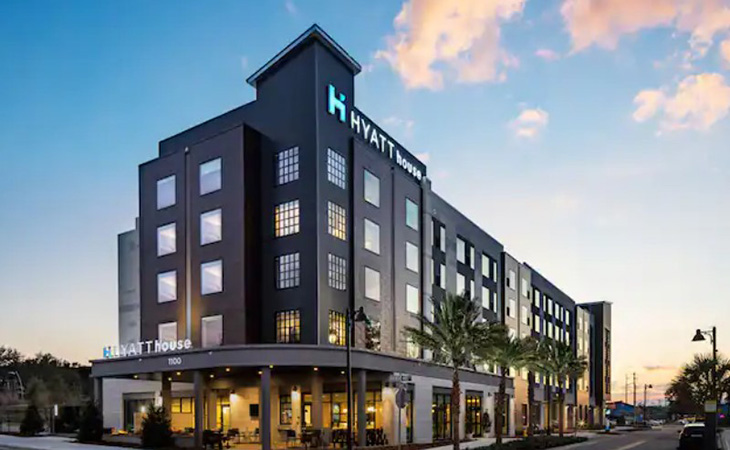
Reserve your hotel room at the Hyatt House Tallahassee Capitol-University by September 26 to receive the group rate. The hotel is located at, 1100 Railroad Ave, Tallahassee, FL 32310.
Phone: +1 850 425 1500
2026 User Committee Meeting & Workshop Booking Link | Hyatt House Tallahassee Capitol - University
The National High Magnetic Field Laboratory is dedicated to fostering a safe, inclusive, diverse, and equitable atmosphere for everyone visiting or using the educational and research facilities. All participants, attendees, vendors, staff, volunteers, and all other stakeholders are required to conduct themselves in a professional manner that is welcoming to all participants and free from any form of discrimination, harassment, or retaliation. Participants will treat each other with respect and consideration to create a collegial, inclusive, and professional environment. At any time during this meeting, if any concerns or issues arise, please reach out to any of the organizers.
The MagLab is funded by the National Science Foundation and State of Florida and operated by Florida State University, the University of Florida, and Los Alamos National Laboratory.
The Florida State University is An Equal Opportunity/Access/Affirmative Action/Pro Disabled & Veteran Employer. View FSU's Equal Opportunity Statement.
The University of Florida has Core Values that include Community, Freedom & Civility, and Inclusion, https://www.ufl.edu/about/core-values/, which are expected for all stakeholders and visitors, and is an equal opportunity institution, https://hr.ufl.edu/homepage/, where compliance reporting is available in several ways, https://titleix.ufl.edu/.
Los Alamos National Laboratory believes diversity fuels the innovative, agile, and principled workforce that is essential to solving problems of global importance. LANL is an Equal Employment Opportunity and Affirmative Action Employer. View LANL's Inclusion and Diversity Resources.
Transportation and parking details will be shared closer to the event.
Last modified on 15 September 2026