The MagLab is funded by the National Science Foundation and the State of Florida.
The MagLab is funded by the National Science Foundation and the State of Florida.

Aims to ensure that all products derived from research done at the MagLab are shared according to the principles of FAIR data and open science.
The National MagLab recognizes that the National Science Foundation (NSF), National Institutes of Health, National Academies of Science, Engineering & Medicine, the White House Office of Science and Technology Policy, and many other U.S.-based and international organizations strongly support the open sharing of research data. Studies on open data sharing have shown that this practice is essential to advancing innovation, maximizing the benefit of publicly funded research, and ensuring the long-term availability and replicability of scientific research. Research data should be shared in accordance with the principles of FAIR data and open science and this Center established in 2023 works with MagLab researchers to share high magnetic field research with the broader science community.
Featured talks from FAIR data experts across scientific fields. View FAIR Data events
The MagLab’s Center for FAIR and Open Science aims to ensure that all products derived from research done at the MagLab are shared according to the principles of FAIR data and open science. It recognizes that there are technical and cultural challenges within the fields of science and engineering that complicate the adoption of open data sharing practices. The Center works to address these challenges by working with users and staff to provide knowledge and tools that simplify the process of FAIR and open data management, making it an integral and seamless part of the research experience that maximizes benefit to all present and future stakeholders.
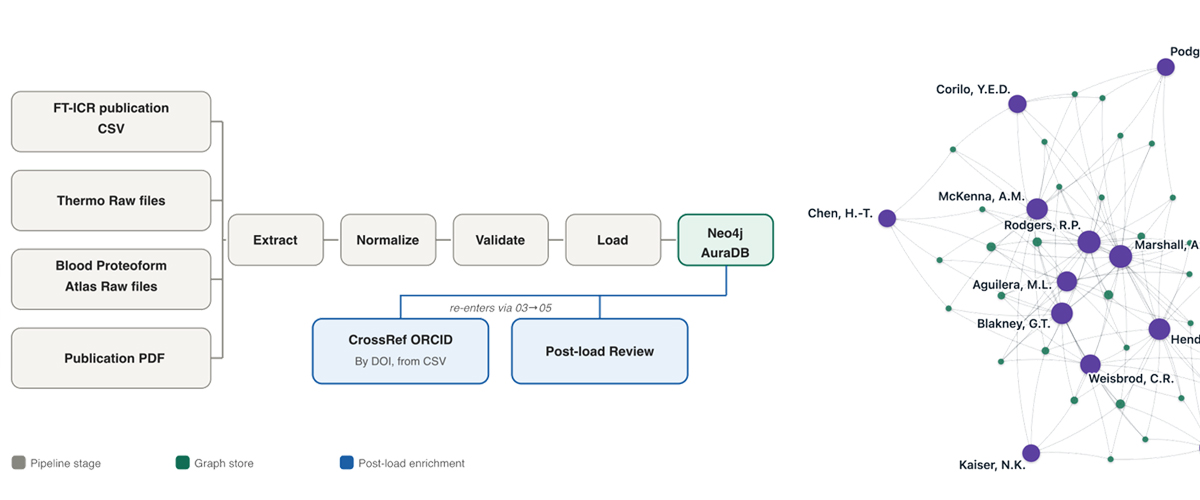
Greenberg, J.; Pepper, J.; Zhao, X.; Marciano, R.; Breen, D.; An, Y. AI Magazine 2026, 47 (2), e70060.
Read the full publication https://onlinelibrary.wiley.com/doi/10.1002/aaai.70060 online.
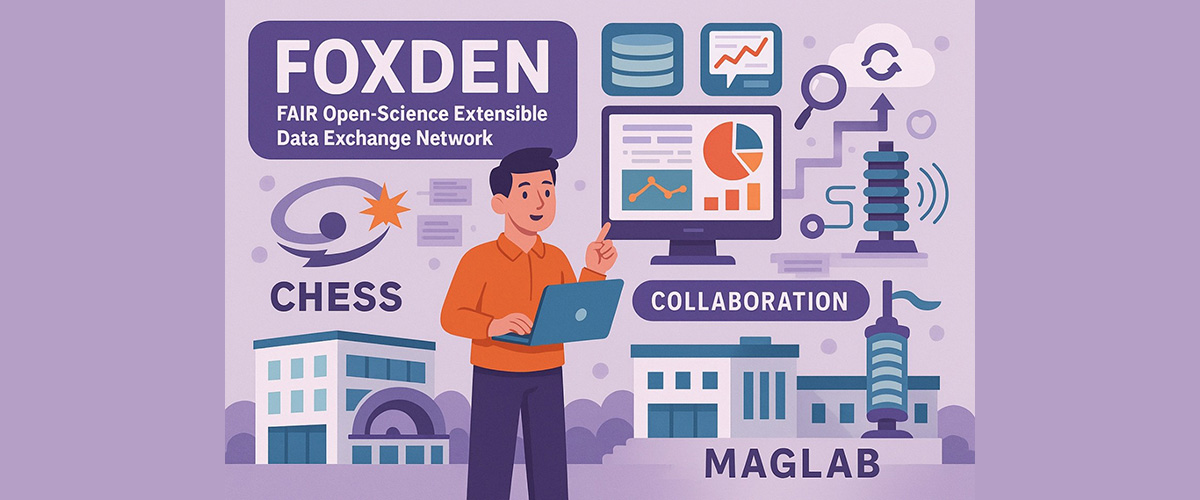
Akhtar, M. et al. Croissant: A Metadata Format for ML-Ready Datasets.
Read the full publication https://dl.acm.org/doi/10.1145/3650203.3663326 online.
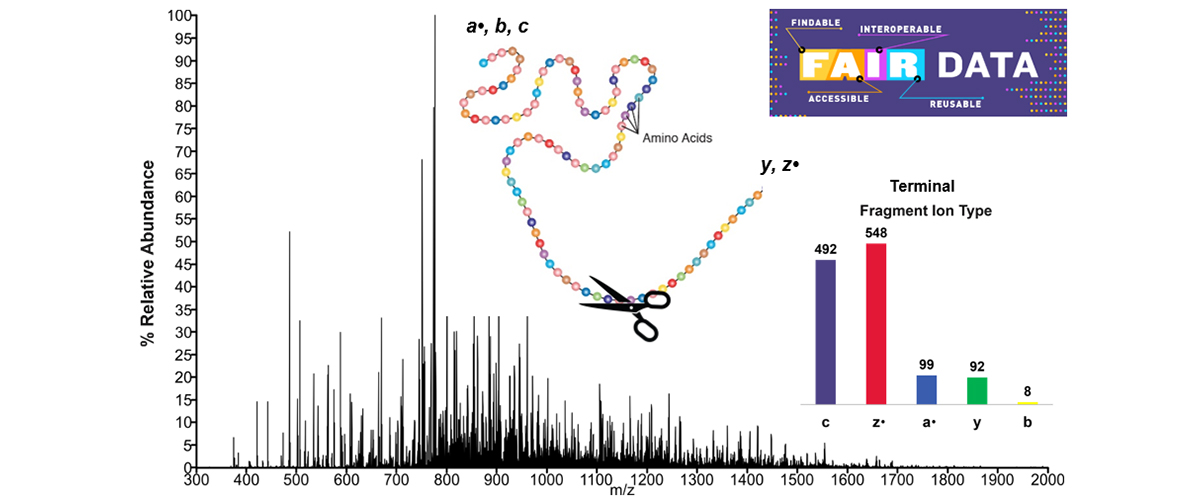
Mikawy, N.N.; Ramírez, C.R.; DeFiglia, S.A.; Szot, C.W.; Le, J.; Lantz, C.; Wei, B.; Zenaidee, M.A.; Blakney, G.T.; Nesvizhskii, A.I.; Loo, J.A.; Ruotolo, B.T.; Shabanowitz, J.; Anderson, L.C.; Hakansson, K., Molecular and Cellular Proteomics, 17 (23), 100814 (2024)
Read the full publication https://www.sciencedirect.com/science/article/pii/S153594762400104X?via%3Dihub online.
For more information, contact program director David Butcher.


