


Who are the scientists?
University of Washington grad student Patrick Monreal lead the research, with collaborators from Stanford, the University of California Santa Cruz, Cascadia Research Collective, and Pacific Marine Environmental Laboratory. At the MagLab, they collaborated with research faculty analytical chemist Lydia Babcock-Adams.
What is going in the magnet?
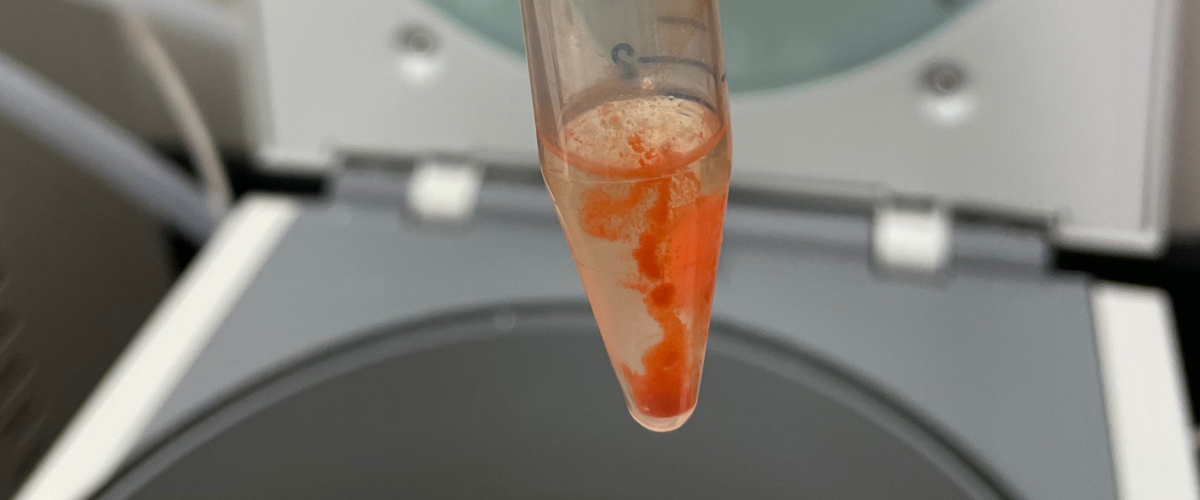
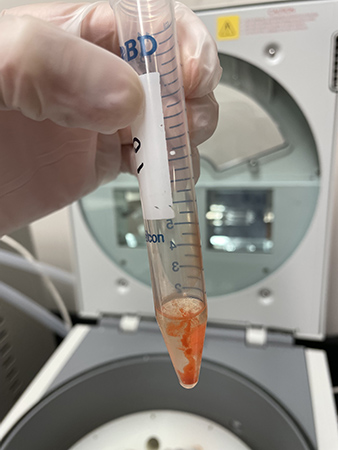
Extracts from whale poop, which happen to be a lovely pink color because of the krill that whales eat. The whale poop releases iron and copper into the ocean. Phytoplankton, the plants of the sea, need iron to grow and they are able to use the iron from whale poop. That’s because the copper that’s been digested by and released from the whales is less toxic.
Why do I care?
Phytoplankton are the foundation of the oceanic food web and are responsible for almost half of the oxygen in the atmosphere. Access to nutrients (like iron) and protection from toxic elements (like copper) have large impacts on their ability to grow and photosynthesize (take in carbon dioxide from the atmosphere and release oxygen), which has implications for the climate. The loss of whales to industrial whaling may disrupt this cycle, changing how these elements move through the ocean.
Story by Edan Schultz